


How Channel Nine fast-tracked media workflow orchestration with qibb

For many media teams, the challenge is not just moving content through systems. It is getting new workflow technology onboarded, integrated, and into production quickly, without a long implementation cycle or a heavy services burden.
That is what makes Channel Nine’s adoption of qibb notable.
Working across an environment that includes Mimir, Saga, and AWS-based storage and archive infrastructure, Channel Nine used qibb to create an orchestration layer around key media workflows. Rather than treating automation as a large transformation project, the team took a pragmatic route: onboard quickly, apply qibb to real operational needs, and move into live production use at speed.
The result is a growing set of production workflows that help automate media handling, improve consistency across systems, and reduce manual effort in areas that previously required custom intervention.
“qibb gave us a practical way to connect the systems we already rely on and start building around real operational needs straight away,” said Will Lennox, Systems Engineer at Channel Nine. “We were able to get hands-on quickly, build useful workflows, and expand from there.”
From onboarding to production use
One of the most notable parts of Channel Nine’s journey with qibb is how quickly the team was able to get value from the platform. After some initial guidance, the team largely self-onboarded and built confidence through hands-on use. That approach allowed them to move quickly from evaluation into production, using qibb to solve specific workflow and integration gaps around their existing media systems.
Instead of relying on qibb for a single isolated use case, Channel Nine has applied it across several operational workflows, making it part of the way content moves through its environment.
Building around real media operations
Today, Channel Nine is using qibb to support a growing set of workflows across its media supply chain, spanning systems such as Mimir, Saga, and AWS storage.
These workflows cover key operational areas including asset re-archiving and deduplication, publishing and delivery from Saga into downstream S3-based environments, automated retention and lifecycle management, operator-driven versioning and export actions, and archive cleanup. Together, they help the team connect systems more effectively, automate repeatable tasks, and manage content movement with greater consistency across the environment.
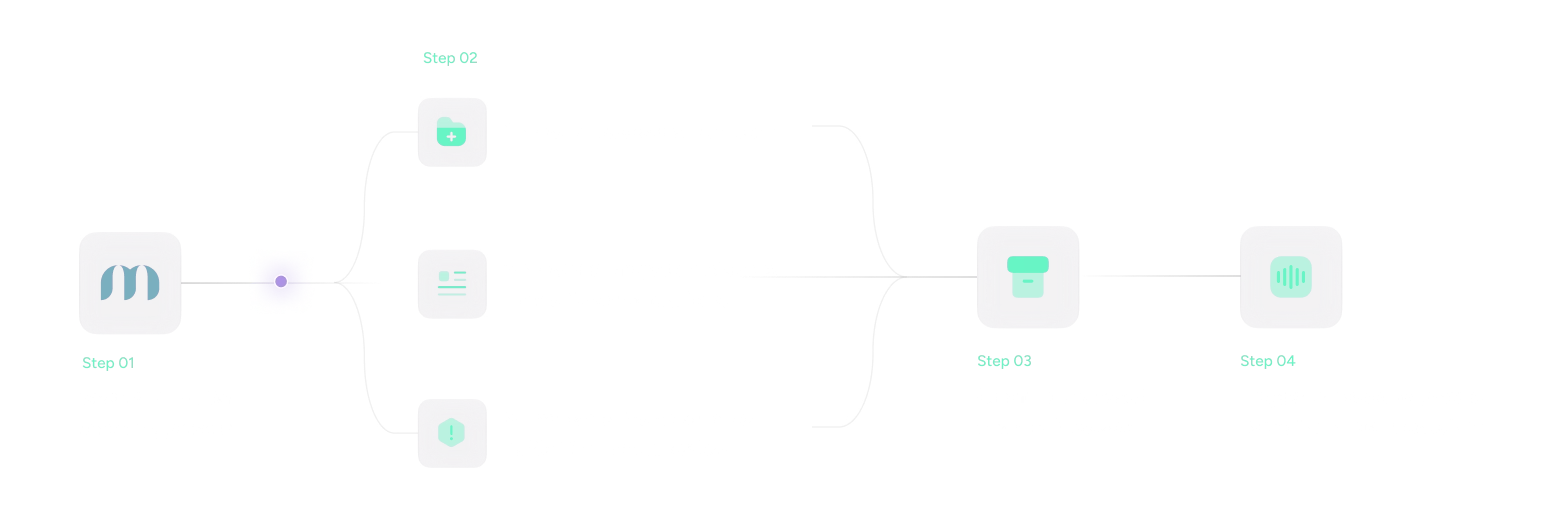
Rather than relying on qibb for a single isolated use case, Channel Nine has applied it across multiple parts of day-to-day media operations. That broader usage is what makes the story compelling: qibb is already supporting real production processes across ingest, publishing, archive, and lifecycle management.
Extending existing systems with orchestration
A key theme in Channel Nine’s use of qibb is orchestration around the systems already central to its environment.
While platforms such as Mimir and Saga remain core to the media operation, qibb has helped the team build the logic that sits around them, especially where workflows need to cross into other systems, support conditional business logic, or automate processes not covered natively.
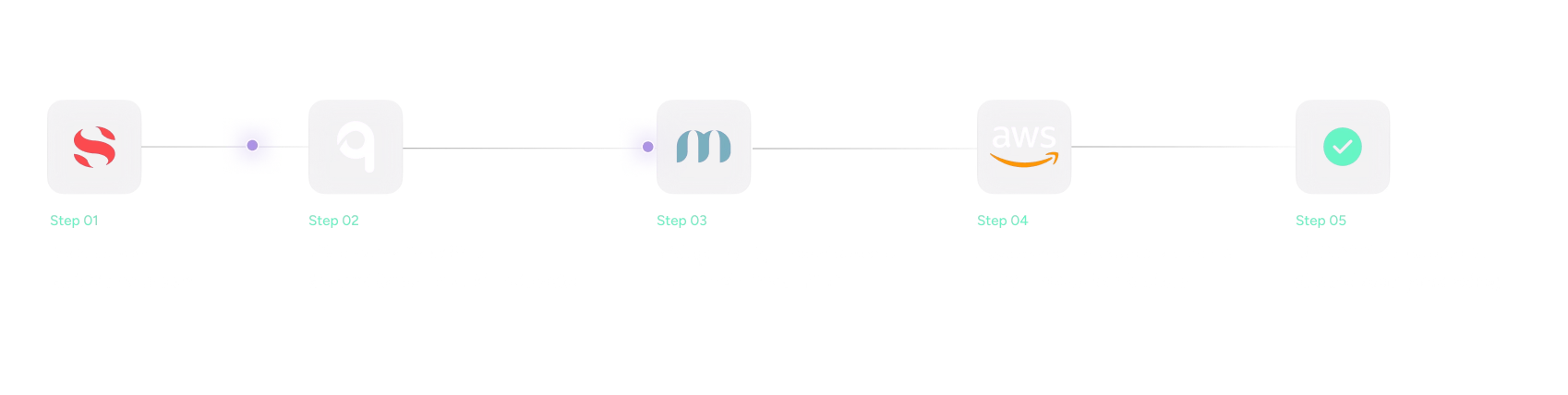
That includes workflows tied to publishing, archive handling, lifecycle management, and content processing steps such as transcription, transcoding, and face detection. By adding qibb into the mix, Channel Nine has been able to create a more flexible operating layer around those processes.
“qibb has given us a flexible way to build around our existing environment rather than forcing everything into a fixed pattern,” said Lennox. “That has made it easier for us to connect systems, automate repeatable tasks, and shape workflows around how our teams actually work.”
A self-driven adoption model
Channel Nine’s experience also highlights an important point for media organizations evaluating workflow orchestration: successful adoption does not always require a long, heavyweight implementation cycle.
In this case, the team was able to learn the platform, apply it to immediate priorities, and expand usage in a self-driven way. That combination of accessibility and flexibility helped them move from initial onboarding to meaningful production use without needing to pause for a large-scale transformation effort.
For qibb, that is a strong example of how media teams can adopt orchestration incrementally. Start with a workflow gap. Build around operational reality. Expand as value becomes clear.
Fast onboarding, fast path to value
What makes Channel Nine’s story compelling is not just the workflows in place today. It is the speed with which the team was able to move from onboarding into live use.
By building orchestration across systems such as Mimir, Saga, and AWS storage, Channel Nine created early momentum quickly and established a practical foundation for future automation. Rather than spending months in setup, the team was able to get qibb into production, prove value through real workflows, and create a base they can continue to build on over time.
Their experience reflects a broader shift happening across media operations: teams want tools that fit into the systems they already use, are easy to adopt, and can deliver value quickly without slowing down operations.
Channel Nine’s work with qibb shows what that can look like in practice: fast onboarding, rapid go-live, and a flexible foundation for continued workflow automation.

qibb today


How Channel Nine fast-tracked media workflow orchestration with qibb

Premiere Digital Services selects qibb as orchestration platform
Orchestrating media workflows across AWS services with qibb
What's new with qibb at NAB Show 2025: AWS Marketplace launch, advanced media workflow management, and AI copilot unveiled
Trusted, certified, secure: qibb achieves ISO 27001 to safeguard your data and ensure compliance