


How a European broadcaster saved over €80,000 in one year with qibb’s media workflow orchestration platform

Managing digital assets across multiple 24/7 channels is a complex and resource-intensive task, even for broadcasters that already run cloud-native MAM and playout systems. Manual housekeeping, storage management, and quality control still eat up time and budget.
To fix this, one European broadcaster deployed qibb as a low-code media workflow orchestration platform on top of its existing MAM and playout stack. By automating housekeeping tasks, optimising storage usage, and streamlining quality checks, qibb helped the broadcaster save more than €80,000 in the first year alone.
This case study breaks down where those savings came from and how other broadcasters can replicate them.
Achieving cost savings through media workflow automation
The savings were generated through three primary levers: automating manual housekeeping tasks, reducing storage costs, and resolving process inefficiencies. qibb automated archiving and deleting unnecessary or published assets, tasks that previously required manual intervention. This eliminated tedious work and led to significant storage cost savings by removing unused files and utilizing more cost-effective storage tiers. Additionally, automating quality control tasks, such as managing forbidden characters and file formats, and integrating review and approval processes within standard communication tools, minimized process errors and significantly reduced time to air.
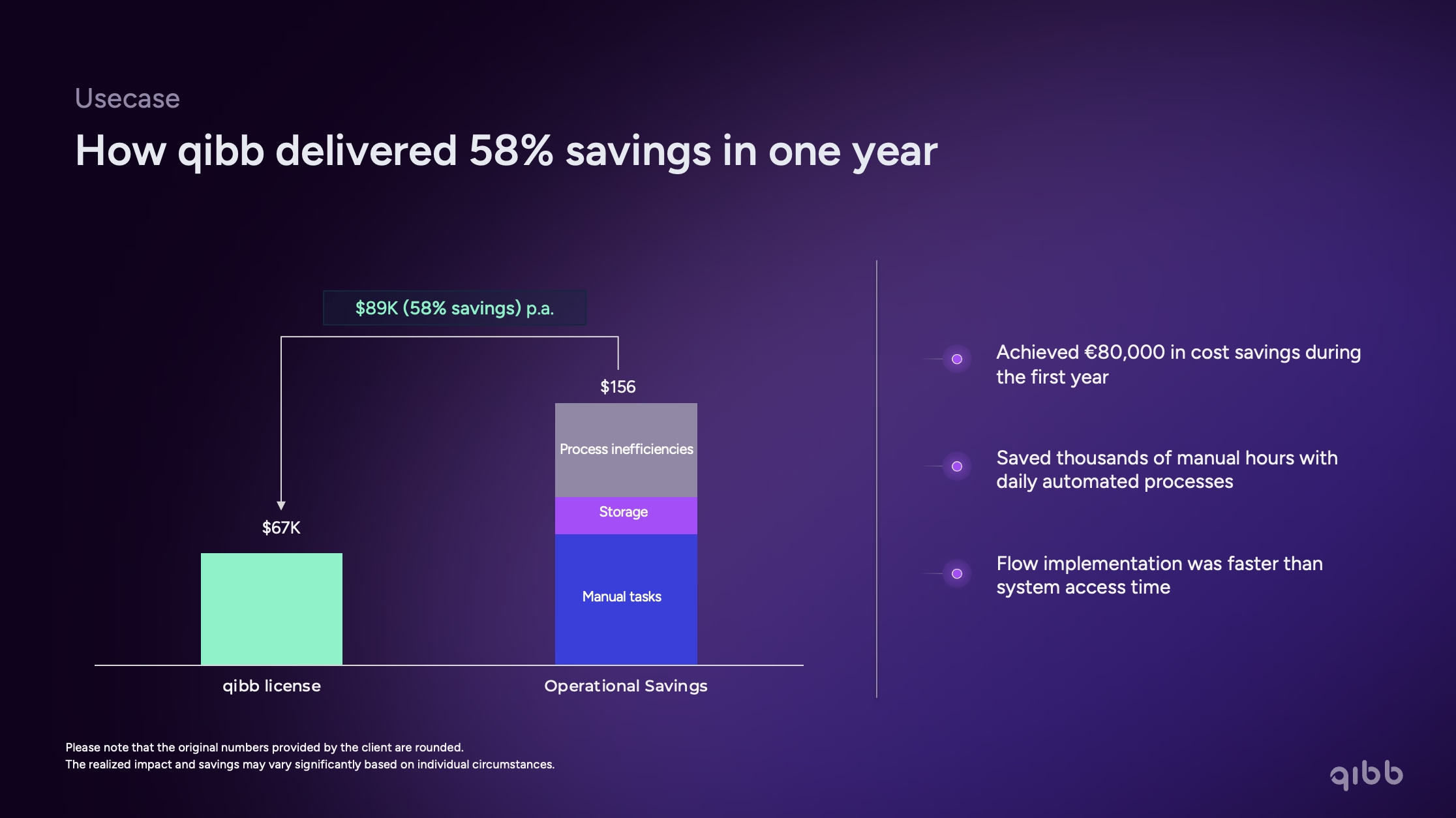
Overall, we categorize the benefits of automation within the media industry into three key areas: eliminating repetitive tasks, optimizing resource utilization, and streamlining processes. qibb’s impact on this broadcaster clearly illustrates the substantial value these improvements can deliver.
Eliminating repetitive tasks
In the media industry, production, management, and distribution workflows often involve a significant number of repetitive tasks. These tasks typically include copying and pasting metadata between systems, exporting and importing media files, managing content localization, and creating different versions of the same content.
A prime example from our case study is asset housekeeping—such as manually archiving or deleting files—which often occurs multiple times a day, consuming valuable time and resources. However, these processes can be easily automated with straightforward housekeeping rules based on metadata. For instance, rules can be set to automatically archive published projects one day after publication or delete unused scenes or agency wires, significantly reducing the manual workload and streamlining operations.
Optimizing resource utilization
The high degree of manual processes in media workflows often results in inefficient use of resources, which can quickly become costly, particularly when dealing with large file sizes. On-premise, this inefficiency can lead to reaching total capacity, necessitating the purchase of additional hardware. In a cloud environment, inefficient usage directly translates into a higher invoice at the end of the month, impacting the bottom line. This issue extends across various resources, whether it’s storage, streaming servers, transcoders, or rendering farms.
For instance, with one of our customers, we automated the ingest streaming channels around sports events based off of broadcast schedules. This orchestration prevents over-utilization that could occur if staff forget to switch off channels, ensuring that resources are only used when needed. An added benefit is the ability to set up dashboards to monitor utilization and costs, providing a clear overview and further optimizing resource management.
Streamlining processes
A significant source of inefficiency in media workflows stems from idle time, where assets are left waiting at various stages—from ingest approval to being ready for production or final review. Additionally, issues such as missing metadata, corrupt files, and incorrect formats can cause entire processes to stall, leading to delays. These inefficiencies can severely impact time to air, a critical metric in fast-paced environments like news or sports production, and are equally detrimental in post-production scenarios where teams are racing against deadlines.
One effective solution to streamline these processes is the integration of communication tools like Microsoft Teams or Slack. By sending notifications and status updates on assets instantly, these tools accelerate approval workflows and automate quality checks early in the process. This integration significantly reduces idle time and ensures that potential issues are addressed promptly, leading to a faster end-to-end process duration. An additional bonus for utilizing these pre-existing tools is lowered training burden and increased user adoption.
Embracing automation for tangible results
The implementation of qibb illustrates the substantial impact integration and automation can have on operational efficiency. By automating repetitive tasks, optimizing resource use, and streamlining processes, qibb helped the broadcaster save over 80,000 EUR annually within just one year. This success story not only highlights the transformative power of workflow automation but also serves as a call to action for other broadcasters. Imagine what automation could achieve for your operations—explore how qibb can unlock new efficiencies and cost savings for your organization today.
FAQ
How did this broadcaster save more than €80,000 with qibb?
The savings came from three main areas: automating repetitive housekeeping tasks, optimising storage usage, and streamlining quality control workflows. By using qibb as a media workflow orchestration platform on top of its existing MAM and playout systems, the broadcaster reduced manual work, avoided unnecessary storage costs, and cut delays caused by format and metadata issues.
What types of media workflows usually deliver the biggest savings?
The biggest gains typically come from high-volume, low-complexity workflows such as asset housekeeping, archive management, ingest scheduling around sports events, and quality checks that rely on strict technical rules. These are ideal candidates for automation in qibb, freeing up operations teams for higher-value tasks.
Do we need to replace our MAM or playout system to get similar results?
No. qibb is designed to sit on top of your existing systems as a low-code orchestration layer. It connects your MAM, playout, storage, and communication tools into end-to-end workflows so you can capture similar savings without a rip-and-replace project.

qibb today


What is a media iPaaS, and why do media teams need more than generic integration tools?

Media workflow automation vs orchestration: what’s the difference and why it matters
How media teams can measure sponsorship value from live event footage
Five questions every media architect should ask before adding another tool
How policy automation prevents workflow failures in media operations
From elections to major sports events: how orchestration helps newsrooms stay ahead during live events
How media teams can add new AI tools without breaking their workflows
How agentic workflows change the game for overstretched media operations in sports
IBC 2025 proves it: AI works, but workflows hold it back
Low-code, no-code, or custom development: what works best for your media workflows?
How a European broadcaster saved over €80,000 in one year with qibb’s media workflow orchestration platform