


The situation
A media organization responsible for live coverage of a leading professional sports league in the MENA region set out to modernize its master control room and playout operations to support large-scale live sports production using distributed, cloud-enabled workflows.
Across the broadcast industry, remote commentary has become a standard production requirement. Commentary teams are increasingly distributed across locations, multilingual feeds are more common, and production schedules demand a level of flexibility that traditional on-site commentary setups struggle to provide.
To support these evolving operational requirements, the organization implemented a remote commentary platform from Spalk, integrated through qibb, which provides the orchestration layer connecting Spalk’s APIs into a centralized, operator-facing workflow used by MCR teams during live sports production.
The challenge
As live sports coverage expanded, remote commentary quickly evolved from an occasional workflow into a core component of daily live production operations.
Each event required the creation of both main and backup commentary paths, with teams, SIP lines, and audio configurations provisioned correctly and consistently under tight production timelines.
Before automation, this setup was largely manual and spread across multiple systems. Operators needed to create commentary events individually, assign commentators and SIP lines, and ensure the correct configuration was applied for each production environment. Live match schedules left little margin for configuration errors or delays.
This introduced several operational risks, including configuration drift between main and backup events, resource conflicts across commentators, SIP lines, or channels, and limited operational visibility for operators who needed a single dashboard to confirm event readiness and system health.
As the number of concurrent live productions increased, the process became increasingly repetitive and dependent on individual operator experience, creating additional workload and operational risk for MCR teams.
The solution
.avif)
To support remote commentary at scale, the organization implemented an API-driven event creation and management workflow using Spalk and qibb.
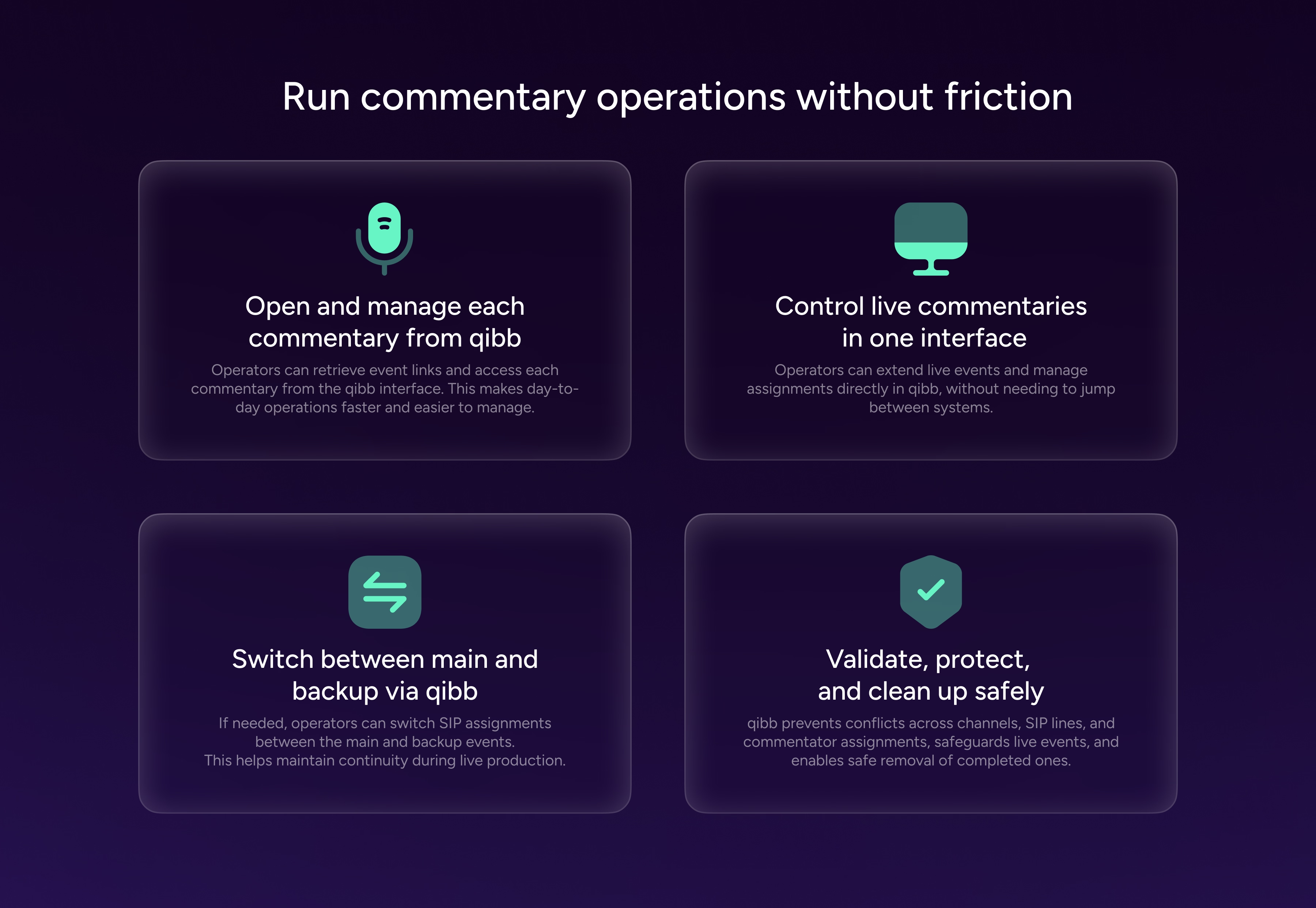
Through Spalk’s APIs, qibb provides a dedicated dashboard that allows operators to create, configure, and monitor commentary events from a single operational interface aligned with existing MCR workflows. This gives teams a centralized orchestration layer for remote commentary workflows while reducing manual setup effort and improving consistency across live productions.
The implementation
The new workflow was introduced through a controlled rollout that included rehearsal events ahead of live match production. Using qibb’s orchestration dashboards, operators were able to manage commentary event creation and monitoring within their existing operational environment. Rehearsals validated event creation, redundancy configuration, and commentator assignment across parallel productions.
Once validated, the same workflow was used unchanged during live match coverage. The project moved from scope to live match production in under 10 weeks.
The results
Within three months, the workflow supported both rehearsal and live match production at scale.
3 live matches produced
Up to 3 matches supported simultaneously
Up to 6 commentators active concurrently
17 commentators onboarded across production
The solution demonstrated that remote commentary could be operated as a repeatable, production-grade workflow, capable of supporting live sports operations under scheduling pressure and concurrency.
Ready to scale remote commentary for live sports?
Learn how qibb connects and automates media workflows across your broadcast stack.
